How a strip of beech becomes a coat stand
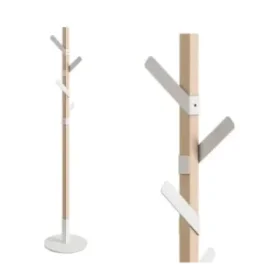
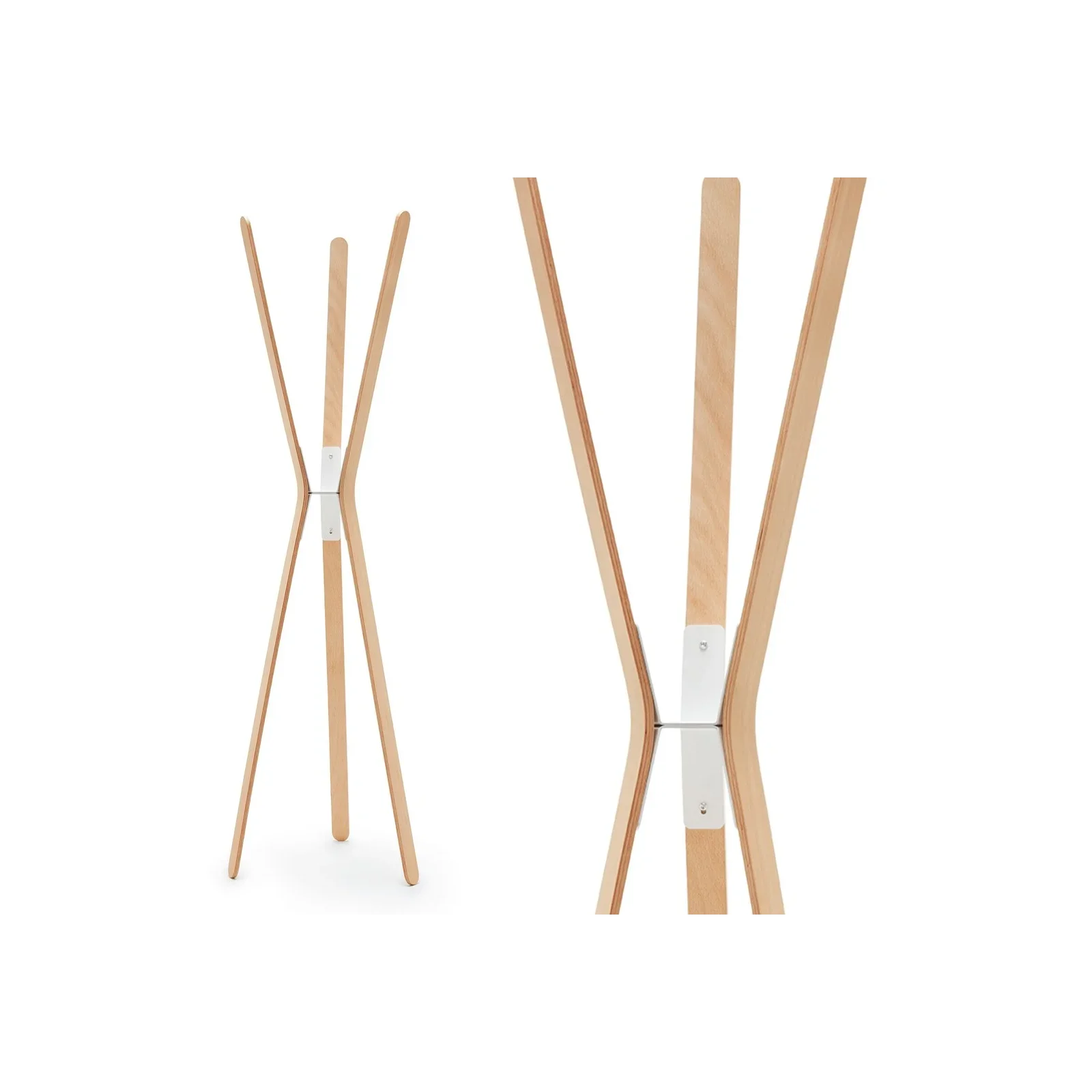
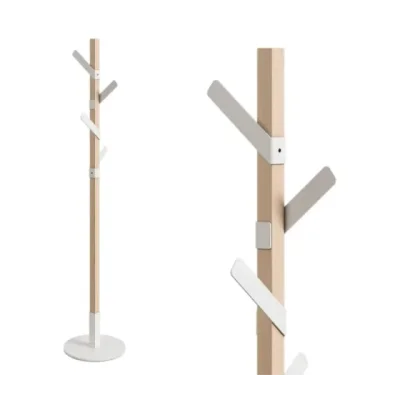
Follow one piece of timber on Milano from the floor upwards. It rises on a diagonal, meets the other slats at the waist and peels away to make a place for a coat. That line explains most of the design. Roger Vancells uses one element for the foot, the upright and the hook. By the time you reach out to hang a jacket, you can see exactly how the stand holds itself up.
Where the slats meet
Each beech slat is 5 cm wide. Face on, it looks like a broad ribbon. Seen edge on, it narrows to a fine line. Walk past the stand and those changing widths give it a sense of movement. The curves send the ends in different directions while keeping the middle tightly gathered. It is a detail you can pick out from the far end of a hall and appreciate again close up.
At the centre is a connector made from 3 mm sheet iron that holds the slats in position. Its screws are concealed, leaving a clear view of the point where the metal meets the wood. Lower down, the open spaces between the feet frame glimpses of the floor. On patterned tiles you can still follow the pattern through the base, a small consideration that matters if the floor is part of the character of your entrance.
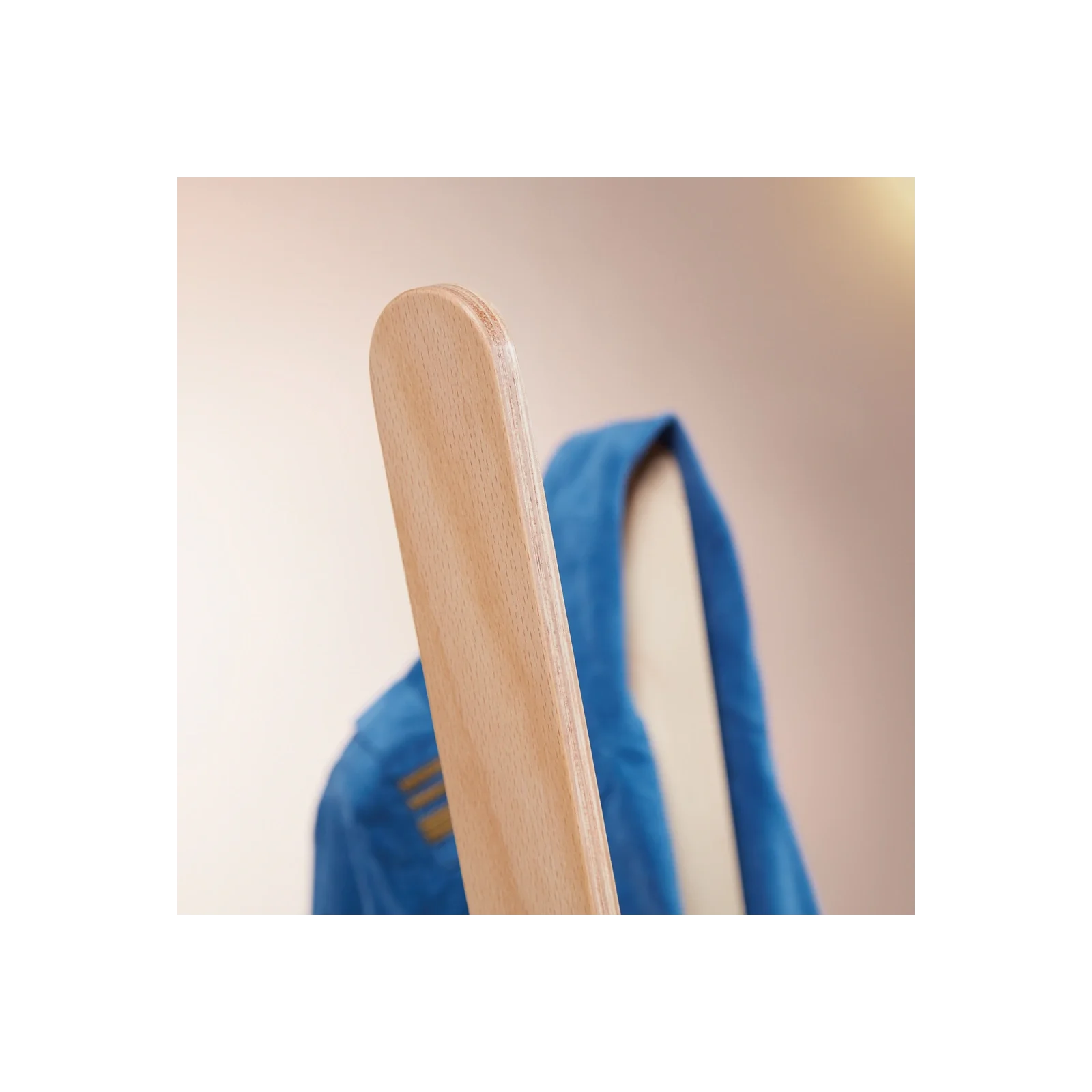
Think about the width of the timber if you usually hang a jacket by its hanging loop or a bag by its handles. A broad handle will slip over a tip. With a narrow loop, you can simply rest the collar of the jacket directly on the wooden slat.
Choosing three or six slats
The three-slat model has the open outline of a tripod. It suits an entrance where you keep your everyday coat and like to see each separate curve when you take it down. The six-slat model has a fuller fan of timber and six tips to divide between garments. In a shared hall, you might hang long coats on one side and keep the nearest tips free for a bag or the scarf you reach for on your way out.
Both models stand 165 cm high and measure 61 cm across. You can decide how many hanging points you need without finding a different spot for the six-slat version. The weight does change. Three slats bring the stand to 6 kg and six take it to 9 kg. If you move furniture around when guests come over, that is a practical difference to take into account.
What each finish brings to the room
In natural beech, the grain runs the length of each slat and shows how the wood turns as it passes the centre. An upholstered bench or a mirror makes a quiet neighbour for that texture. In RAL 9003 white, the shadows in the gaps bring out the volume. RAL 7016 anthracite gives those same openings a stronger outline and can pick up the dark rim of a mirror or a door handle nearby.
Finding a spot and looking after the wood
Mark out 61 cm on the floor and open the nearest door fully. Then try the movement of lifting a coat off from the side you would approach it. Giving the sleeves a little room can make more difference in daily use than placing the stand tight into a corner. Step back to the doorway, too. A small turn of the stand changes which curves you see against the wall when you first walk in. In a bedroom, the same check will help you keep tomorrow’s clothes within reach while leaving space to open the wardrobe.
For routine cleaning, run a slightly damp cloth over the slats and dry them afterwards, including the inside of each curve. The construction also allows the timber and iron to be separated at the end of the stand’s life. It is a fitting detail for this Made Design Barcelona piece. The joint you notice when you first look at it is also what allows its two materials to come apart.


















































Leave a review